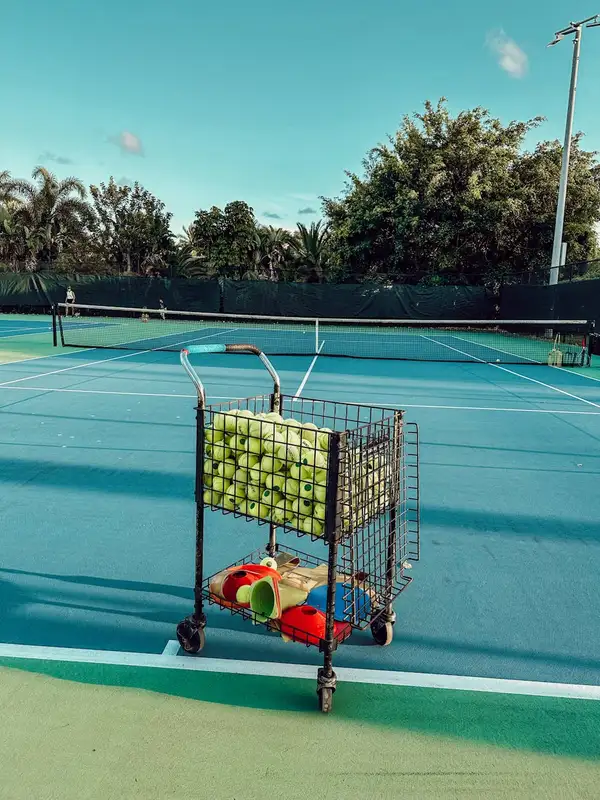
The tennis world is grappling with a pressing environmental issue: the disposal of tennis balls. Annually, around 330 million tennis balls are manufactured worldwide, with the majority ending up in landfills, where they can take over 400 years to decompose. This problem is particularly evident during major tournaments like the U.S. Open, which utilizes nearly 100,000 balls throughout the event.
The challenge of recycling tennis balls is largely due to their design, which has remained mostly unchanged since the 1920s. These balls are composed of a felt covering adhered to a hollow, air-filled rubber core. The strong adhesive and the blend of wool and nylon in the felt make recycling difficult. Furthermore, the core of most high-performance tennis balls is made from virgin rubber, raising concerns about deforestation.
Efforts to tackle these issues are underway. Various nonprofit organizations and companies are exploring innovative ways to repurpose old tennis balls beyond their traditional uses, such as dog toys. Some initiatives involve grinding down the balls to create materials for horse arenas and even tennis courts. However, experts remain skeptical about the long-term viability of these efforts without the development of a fully recyclable tennis ball.
The International Tennis Federation (ITF) is actively pursuing solutions, including the potential design of a fully recyclable ball and strategies to extend the lifespan of balls used in competitions. The ITF’s approach emphasizes reducing the number of balls used, reusing them when possible, and recycling as a last resort.
Innovative solutions are emerging, such as repressurizing old balls and creating balls partially made from recycled materials. Wilson Sporting Goods has introduced the Triniti ball, which is designed to last longer with a more durable core and tougher felt. Meanwhile, organizations like RecycleBalls are collecting and repurposing tennis balls across the U.S. and Canada, exploring new applications for the recycled materials.
Although a fully recyclable tennis ball has yet to be developed, the industry is making strides toward sustainable solutions. The challenge lies in balancing performance specifications with environmental considerations. As awareness of the issue grows, the push for innovation in tennis ball design continues, aiming to secure a more sustainable future for the sport.