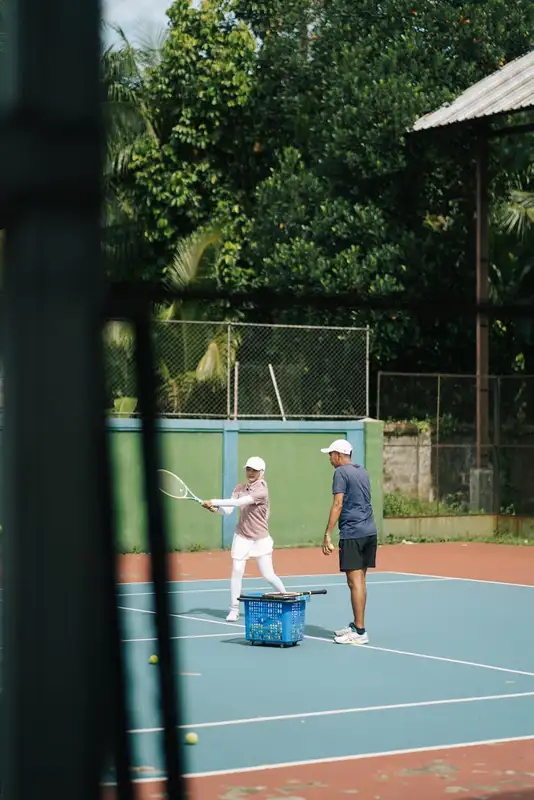
Casey Dellacqua attributes her recent surge in performance to a harmonious blend of physical fitness and mental resilience. This dual focus has been pivotal in her training regimen, allowing her to elevate her game significantly.
To maintain her power on the court, Casey incorporates short sprint drills into her routine, ensuring she stays agile and explosive.
Prioritizing Quality in Practice
“In terms of on-court training, I emphasize quality over quantity. I prefer to have a focused 90-minute session that ends positively rather than exhausting myself. On match days, I typically warm up for about 30 minutes, compete in the match, and then analyze areas where I can improve. During intensive training periods, I dedicate three to four hours daily on the court. Mornings are reserved for specific drills with my coach, Nicole Pratt, while afternoons are spent playing practice sets with other players. Even in these sessions, we maintain a high level of intensity,” she explains.
“It’s not necessary to spend endless hours on the practice court, which can lead to fatigue and frustration. While there are moments when pushing through challenges is essential, the key is to have a clear purpose or goal for each session.”
Training with Intensity
“Training alongside top players has taught me that their practice mirrors their match play. One of the most intense practice sessions I experienced was with Ai Sugiyama, a seasoned player and former top-ten competitor,” Casey shares.
“I recognize that I need to enhance the intensity of my practice. I tend to be more relaxed, even during competitive matches. This is something I’ve learned from Nicole, who has helped me prepare for matches and improve my overall game. She brings a different energy to our sessions, and I have immense respect for her. Having worked together since March, I’ve gained valuable insights into devising specific game plans tailored to my opponents.”
“On the practice courts, I observe the training styles of others. While some players are secretive about their practice routines, which is understandable, I notice that many top players have male coaches for technical drills but prefer to practice sets with female players. Now that I’ve broken into the top 50, I find that others are eager to practice with me, partly to analyze my playing style.”
Resisting Trends in Training
“Tennis often embraces new training methods, equipment, and sports science trends, which can sometimes feel faddish. Currently, there’s a lot of talk about Spanish drills, which involve hand-fed exercises focusing on lateral movement, shot consistency, and stamina. It’s intriguing to consider why countries like Spain and Russia produce so many young, high-caliber players. When I was 16 or 17, I certainly wasn’t at the same level as my Russian peers. Australians tend to mature later, often peaking between the ages of 23 and 25,” Casey reflects.
“Ultimately, tennis is a highly individual sport. While it’s beneficial to observe what others are doing, each player must concentrate on what works best for their unique physical, mental, and technical needs.”
– Suzi Petkovski